

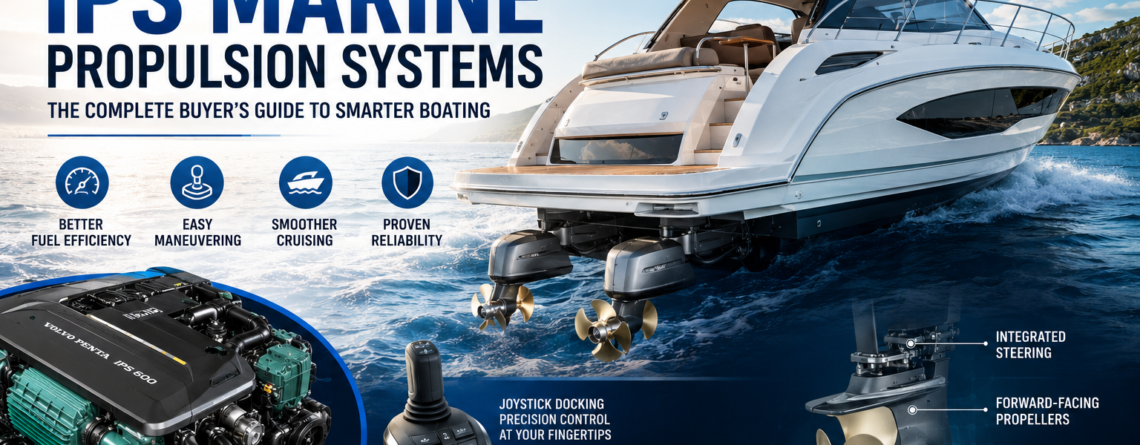
When most people shop for a boat, they naturally focus on the engine.
How much horsepower does it produce?
How fast will the boat go?
How fuel efficient is it?
Those are all important questions—but after years of helping customers choose propulsion packages at Rong Marine, we’ve learned that experienced boat owners eventually ask a different question:
“How will this boat actually feel on the water?”
That’s where Volvo Penta IPS Marine Propulsion Systems completely change the conversation.
The propulsion system beneath your boat influences almost everything you experience as an owner. It affects how easily you dock, how smoothly the boat cruises, how much fuel you burn, how much vibration reaches the cabin, and even how relaxed you feel after a long day offshore.
Many owners initially compare engines.
Experienced captains compare complete marine propulsion systems.
That difference in thinking is one of the biggest reasons Volvo Penta IPS has transformed modern recreational and commercial boating.
At Rong Marine, we’ve helped customers compare conventional shaft drives, sterndrives, and Volvo Penta IPS Marine Propulsion Systems for express cruisers, luxury yachts, offshore fishing boats, and commercial vessels. While every boat has different requirements, one thing has remained remarkably consistent:
Owners who choose the right propulsion system for their boating style almost always enjoy their boats more over the long term.
Whether you’re researching Volvo Penta engines for sale, planning a marine engine repower, or simply trying to understand why IPS has become one of the most talked-about innovations in marine propulsion technology, this guide will help you make an informed decision.
Throughout this guide, we’ll explain:
- How Volvo Penta IPS Marine Propulsion Systems work
- Why they are different from conventional drives
- Their real-world advantages and limitations
- Which Volvo Penta diesel engines are commonly paired with IPS
- Maintenance considerations
- Whether IPS is the right choice for your boat
Why Volvo Penta IPS Marine Propulsion Systems Changed Modern Boating
Every industry experiences moments that permanently change expectations.
In the automotive world, anti-lock braking systems and automatic transmissions transformed the driving experience.
In aviation, fly-by-wire technology changed how pilots interact with aircraft.
For recreational boating, many industry professionals consider Volvo Penta IPS Marine Propulsion Systems one of those defining innovations.
Before IPS, most owners accepted that docking large boats required experience, patience, and often additional crew assistance.
Fuel efficiency improvements were usually incremental.
Cabin vibration was simply considered part of boating.
IPS challenged those assumptions.
Rather than refining traditional propulsion, Volvo Penta developed a completely integrated marine propulsion system that combined engines, pod drives, steering, electronics, and controls into one coordinated package.
The result was more than a new drive system.
It fundamentally changed how many boats behave on the water.
Real-World Experience From Rong Marine
One conversation has stayed with us over the years.
A customer visited Rong Marine while comparing propulsion options for a luxury express cruiser.
Like many buyers, he arrived with pages of engine specifications.
Horsepower.
Torque.
Fuel consumption.
He assumed those numbers would determine the best choice.
Instead, we encouraged him to sea trial two nearly identical boats.
One used conventional shaft drives.
The other used Volvo Penta IPS Marine Propulsion Systems.
After returning to the dock, he didn’t mention horsepower.
He simply smiled and said:
“I didn’t expect docking to be the thing that impressed me the most.”
That reaction is remarkably common.
Many customers expect IPS to improve speed.
Instead, they often remember:
- Easier docking
- Better visibility
- Reduced vibration
- Smoother cruising
- Greater confidence when maneuvering
Those practical ownership benefits rarely appear on specification sheets, yet they often become the biggest reason owners remain loyal to IPS technology.
What Is Volvo Penta IPS?
The letters “IPS” stand for Inboard Performance System.
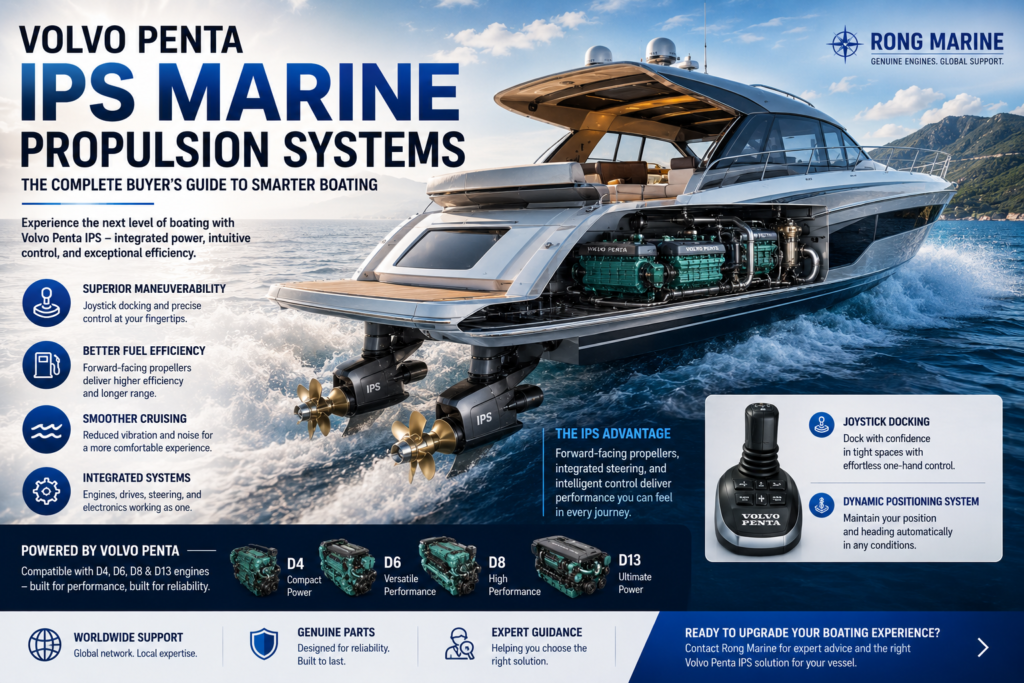
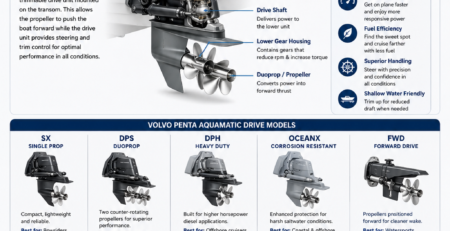
Unlike conventional propulsion systems where propellers push the boat from behind, Volvo Penta IPS Marine Propulsion Systems use forward-facing, counter-rotating propellers mounted on steerable pods beneath the hull.
These pods pull the boat through the water rather than pushing it.
That seemingly simple change creates several important advantages.
The IPS system integrates:
- The engine
- Pod drive
- Steering
- Electronic controls
- Joystick operation
- Navigation integration
Instead of functioning as separate components, they operate together as one intelligent propulsion package.
This integrated approach helps improve:
- Handling
- Acceleration
- Fuel efficiency
- Passenger comfort
- Docking precision
Why Volvo Penta Developed IPS
Traditional propulsion systems have served the marine industry well for decades.
However, Volvo Penta engineers identified several opportunities for improvement.
They wanted to create a system that would:
- Improve marine fuel efficiency
- Increase usable onboard space
- Reduce vibration
- Simplify maneuvering
- Improve offshore performance
- Enhance owner confidence
Rather than redesigning individual components, they redesigned the entire propulsion philosophy.
That holistic approach is one reason Volvo Penta IPS Marine Propulsion Systems remain among the most recognized offshore propulsion systems available today.
How Volvo Penta IPS Marine Propulsion Systems Work
Understanding IPS becomes much easier once you realize that it functions differently from traditional shaft-driven boats.
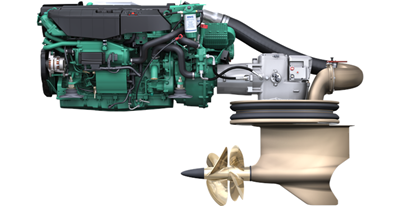
Instead of fixed propellers mounted behind the vessel, IPS uses steerable pods positioned beneath the hull.
Each pod contains:
- A gear housing
- Counter-rotating forward-facing propellers
- Steering mechanism
- Integrated drive components
Because the propellers pull clean, undisturbed water, propulsion becomes more efficient.
At the same time, the steerable pod changes the direction of thrust itself rather than relying primarily on rudders.
That allows the boat to respond more directly to steering inputs.
The result is a propulsion package that feels remarkably intuitive.
Forward-Facing Propellers
One of the defining features of Volvo Penta IPS is its forward-facing propeller design.
Traditional propellers operate in turbulent water flowing beneath the hull.
IPS propellers work in cleaner water ahead of the drive housing.
That allows them to generate thrust more efficiently while reducing cavitation.
The benefits include:
- Improved acceleration
- Better fuel economy
- Reduced vibration
- Quieter cruising
- Increased overall efficiency
Many first-time IPS owners notice how smooth the boat feels long before they begin comparing fuel consumption figures.
Integrated Marine Propulsion Systems
Unlike traditional propulsion setups assembled from separate components, Volvo Penta IPS Marine Propulsion Systems are designed as fully integrated packages.
The engine communicates continuously with:
- Steering controls
- Electronic Vessel Control (EVC)
- Pod drives
- Joystick systems
- Navigation features
Because every component is engineered to work together, owners benefit from a more refined operating experience.
At Rong Marine, this integrated approach is one reason we often recommend evaluating complete propulsion packages rather than focusing solely on engine horsepower.
The Major Benefits of Volvo Penta IPS
Every propulsion system has strengths.
The reason IPS has become so successful is that many of its advantages are immediately noticeable.
Owners commonly report improvements in:
- Marine fuel efficiency
- Acceleration
- Cruising comfort
- Low-speed maneuverability
- Cabin noise
- Passenger comfort
But perhaps the biggest improvement isn’t mechanical.
It’s confidence.
Many owners who previously felt uncomfortable docking large boats discover they enjoy maneuvering once they become familiar with joystick controls.
That confidence encourages them to use their boats more frequently.
And ultimately, that’s what great boating technology should do.
Better Fuel Efficiency
One of the biggest reasons owners investigate Volvo Penta IPS Marine Propulsion Systems is improved marine fuel efficiency.
Several factors contribute to these gains:
- Reduced hydrodynamic drag
- Efficient forward-facing propellers
- Optimized thrust angles
- Integrated electronic engine management
Over hundreds of operating hours, these improvements can significantly reduce fuel consumption compared with many traditional propulsion systems.
For owners who regularly undertake long-distance cruising, improved efficiency can translate into:
- Greater cruising range
- Lower operating costs
- Reduced fuel stops
- Increased offshore flexibility
Reduced Noise and Vibration
Another benefit many owners do not fully appreciate until after sea trials is how much quieter IPS-equipped boats often feel.
Lower vibration levels contribute to:
- Improved passenger comfort
- Reduced operator fatigue
- More enjoyable long-distance cruising
- Quieter cabins
One customer who upgraded from a conventional shaft-driven cruiser commented:
“The boat simply feels more refined.”
That single observation summarizes what many IPS owners experience after making the switch.
Volvo Penta Joystick Docking Explained
If there is one IPS feature that receives more attention than any other, it is undoubtedly Volvo Penta Joystick Docking.
For many boat owners, docking is the most stressful part of every trip.
Wind.
Current.
Limited marina space.
Nearby boats.
Traditional docking often requires significant experience.
Joystick docking simplifies that process dramatically.
Rather than separately controlling engines and steering, the operator simply moves a joystick in the desired direction.
The IPS system automatically coordinates:
- Engine output
- Steering angle
- Pod direction
- Thrust
to move the boat accordingly.
Many first-time users are surprised by how natural it feels after only a short period of practice.
That ease of operation has encouraged countless owners to feel more confident entering crowded marinas and docking without additional crew assistance.
For many customers we work with at Rong Marine, joystick docking is the feature that ultimately convinces them to choose Volvo Penta IPS Marine Propulsion Systems.
Volvo Penta Dynamic Positioning System (DPS)
One of the most impressive innovations built into modern Volvo Penta IPS Marine Propulsion Systems is the Volvo Penta Dynamic Positioning System (DPS).
If joystick docking changes the way you maneuver in a marina, Dynamic Positioning changes the way you operate once you’re away from the dock.
Imagine waiting for a fuel berth to become available.
Or holding position while waiting for a bridge to open.
Or remaining over a fishing spot without constantly adjusting the throttles.
Instead of continuously shifting between forward and reverse, the Dynamic Positioning System automatically uses the IPS drives to maintain your boat’s position and heading.
At Rong Marine, customers are often surprised by how practical this feature becomes.
Many initially think it’s a luxury feature.
After using it for a season, they tell us it’s one of the functions they rely on most.
When Dynamic Positioning Is Most Useful
The Volvo Penta Dynamic Positioning System is particularly valuable when:
- Waiting for fuel docks
- Holding position outside busy marinas
- Preparing fenders and mooring lines
- Waiting for locks or bridges
- Offshore fishing
- Passenger boarding
- Crew preparations
It’s important to remember that DPS is an aid to boat handling—not a substitute for proper seamanship. Wind, current, sea conditions, and local regulations should always be considered when operating your vessel.
Which Volvo Penta Engines Use IPS?
One of the strengths of Volvo Penta IPS Marine Propulsion Systems is that they are available across several engine families.
Rather than being limited to one power range, IPS can be paired with different Volvo Penta diesel engines, allowing owners to choose a propulsion package suited to their vessel size and intended use.
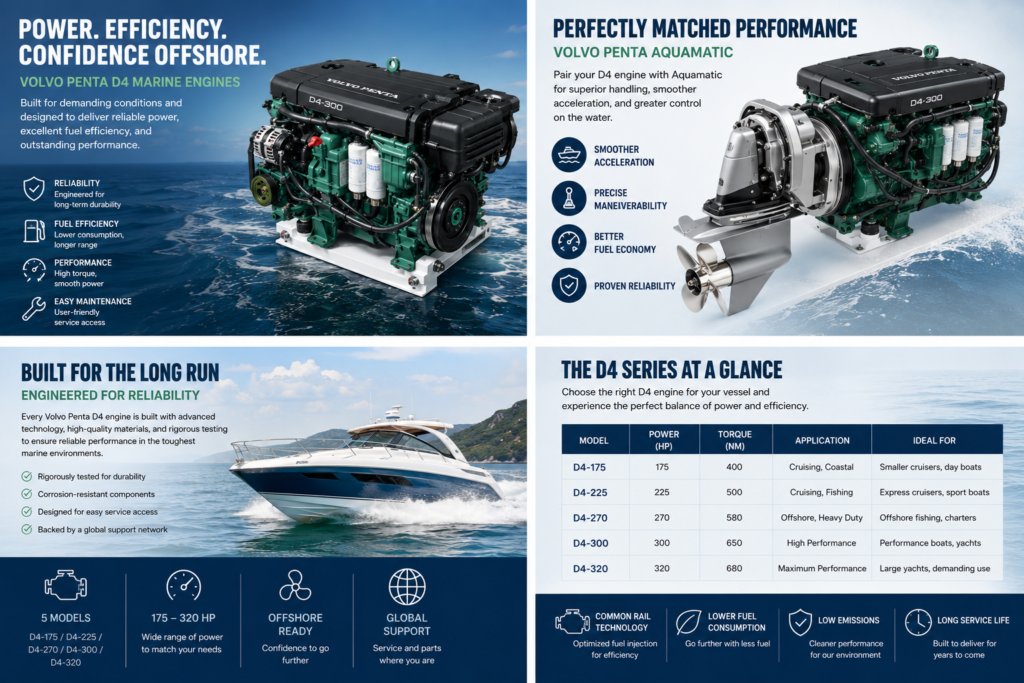
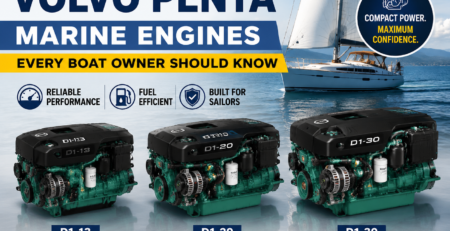
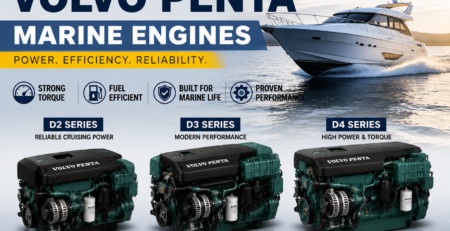
Volvo Penta D4 Marine Engines
The Volvo Penta D4 Marine Engines are commonly paired with IPS in:
- Mid-size cruisers
- Sport cruisers
- Compact flybridge boats
- Coastal performance boats
For owners seeking excellent marine fuel efficiency, responsive handling, and comfortable cruising, D4 with IPS offers an attractive combination.
Volvo Penta D6 Marine Engines
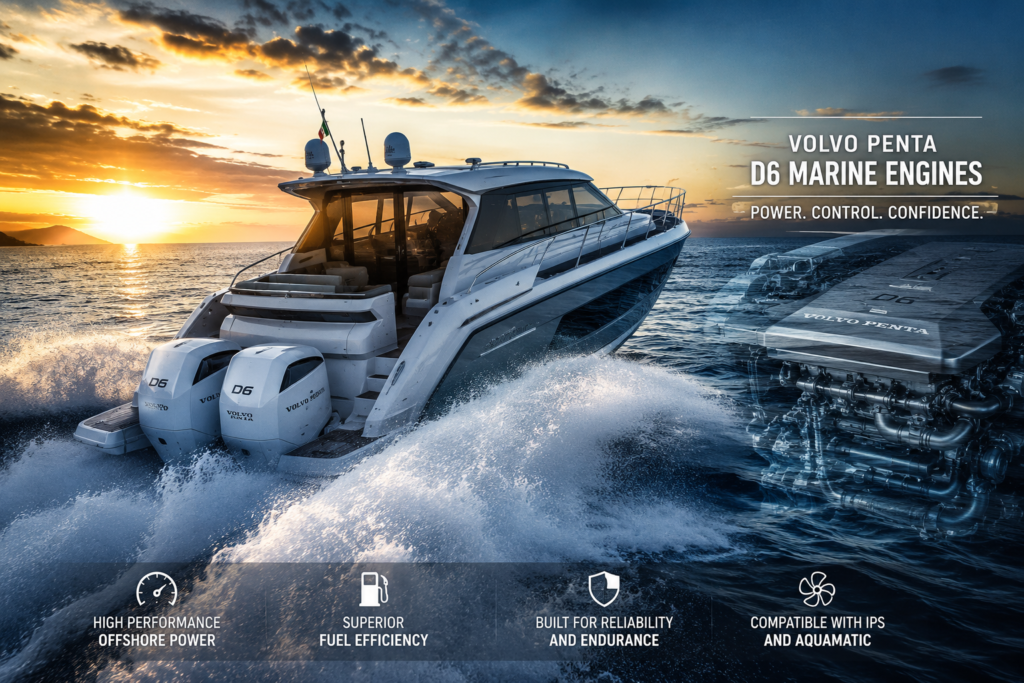
The Volvo Penta D6 Marine Engines represent one of the most popular IPS pairings.
This combination is frequently found in:
- Express cruisers
- Offshore sportfishing boats
- Luxury recreational boats
- Performance cruising yachts
Many buyers consider the D6 and IPS combination to be one of the best-balanced marine propulsion systems available today.
Volvo Penta D8 Marine Engines
Larger yachts often require additional horsepower and torque.
For these vessels, the Volvo Penta D8 Marine Engines paired with IPS deliver:
- Higher cruising speeds
- Increased load capacity
- Long-distance offshore capability
- Smooth high-power operation
Volvo Penta D13 Marine Engines
For premium yachts and larger commercial applications, Volvo Penta D13 Marine Engines can also be configured with IPS.
These installations are typically chosen where operators require:
- Exceptional offshore performance
- Maximum power
- Long-range cruising capability
- Premium onboard comfort
Choosing the Right Engine and IPS Combination
One of the most common misconceptions is that selecting the largest engine automatically produces the best boating experience.
In reality, propulsion matching is far more important.
At Rong Marine, we encourage customers to evaluate:
- Vessel displacement
- Hull design
- Passenger capacity
- Cruising speed
- Typical operating conditions
- Long-term ownership goals
The right propulsion package is the one that complements the boat—not simply the one with the highest horsepower.
Volvo Penta IPS vs Shaft Drives
Perhaps the most common comparison we hear is:
“Should I choose IPS or conventional shaft drives?”
The honest answer is:
It depends.
Both systems have strengths.
Understanding those strengths leads to better buying decisions.
Advantages of Volvo Penta IPS
Owners often choose Volvo Penta IPS Marine Propulsion Systems because they provide:
- Excellent marine fuel efficiency
- Superior maneuverability
- Joystick docking
- Reduced vibration
- Lower cabin noise
- Better acceleration
- More usable interior space in many boat designs
These advantages are especially noticeable in modern recreational cruisers and luxury yachts.
Advantages of Shaft Drives
Traditional shaft drives continue to perform exceptionally well in many applications.
Their strengths include:
- Mechanical simplicity
- Proven long-term durability
- Familiar servicing in many regions
- Excellent suitability for some heavy-duty commercial vessels
Rather than viewing one system as universally better, it’s more accurate to view each as better suited to different operating profiles.
Balanced advice helps buyers make informed decisions.
Volvo Penta IPS vs Sterndrives
Sterndrives remain popular on many recreational boats.
However, IPS offers several distinct advantages on vessels designed specifically for pod-drive propulsion.
Compared with many sterndrive installations, IPS can offer:
- Better low-speed maneuverability
- More precise docking
- Improved long-distance cruising comfort
- Better integration with onboard electronic systems
Sterndrives continue to be an excellent choice for many smaller recreational boats, while IPS tends to shine on larger premium vessels where comfort, control, and efficiency become increasingly important.
Offshore Performance
The true value of Volvo Penta IPS Marine Propulsion Systems becomes especially clear offshore.
Open-water conditions demand predictable handling.
Changing weather requires confidence.
Long operating hours highlight the importance of comfort and efficiency.
Many experienced captains appreciate IPS because it delivers:
- Stable cruising characteristics
- Responsive steering
- Smooth throttle response
- Reduced operator fatigue
Those qualities become increasingly valuable during long offshore passages.
Why Offshore Captains Choose IPS
After working with offshore operators, we’ve noticed they rarely describe IPS using marketing language.
Instead, they use practical words:
- Comfortable
- Predictable
- Efficient
- Easy
- Confidence
One owner who regularly fishes offshore explained:
“After several hours on the water, I arrive feeling less tired.”
That observation isn’t about speed.
It’s about the overall boating experience.
Reduced vibration, easier steering, and smoother handling all contribute to lower fatigue during extended trips.
Fuel Efficiency and Long-Term Ownership
Fuel costs remain one of the largest ongoing expenses for many boat owners.
That makes marine fuel efficiency far more important than many first-time buyers realize.
The IPS system improves efficiency through:
- Reduced drag
- Optimized thrust
- Cleaner water flow to the propellers
- Integrated engine management
Over years of ownership, those improvements can significantly reduce operating costs.
For owners making frequent offshore trips, even modest efficiency gains become meaningful over time.
Real Customer Experiences
One thing we enjoy most at Rong Marine is hearing from customers after they’ve spent time with their new boats.
Interestingly, very few conversations begin with horsepower.
Instead, owners tell us things like:
“Docking no longer feels stressful.”
“The boat feels smoother than I expected.”
“We spend more weekends on the water because operating the boat is simply more enjoyable.”
Those comments remind us that buying a propulsion system isn’t just about engineering.
It’s about improving the entire boating experience.
And that is exactly where Volvo Penta IPS Marine Propulsion Systems continue to stand out.
Maintenance and Long-Term Ownership
One of the biggest misconceptions about Volvo Penta IPS Marine Propulsion Systems is that they require unusually complicated maintenance.
In reality, IPS systems are engineered for long-term reliability when they are installed correctly and serviced according to the manufacturer’s recommended maintenance schedule.
At Rong Marine, we often remind customers that no marine propulsion system is truly “maintenance-free.” Whether your boat uses Volvo Penta IPS, a shaft drive, or a sterndrive, consistent preventative maintenance is what protects your investment and keeps you confident offshore.
Routine servicing typically includes:
- Engine oil and filter changes
- Gear oil inspections
- Propeller inspection
- Seal and bellows inspection
- Steering system checks
- Cooling system maintenance
- Software diagnostics
- Scheduled IPS drive servicing
The good news is that these service intervals are predictable, allowing owners to plan maintenance rather than react to unexpected problems.
What Experienced IPS Owners Have Learned
One thing we’ve noticed over the years is that experienced IPS owners tend to follow a preventative maintenance mindset.
Instead of waiting until something breaks, they regularly inspect and service their boats before the season begins.
This approach often leads to:
- Better marine engine reliability
- Lower lifetime ownership costs
- Fewer unexpected repairs
- Increased resale value
- More confidence during offshore trips
One customer who cruises several hundred hours every season told us:
“Preventative maintenance is much cheaper than emergency towing.”
That advice applies regardless of which marine propulsion system you choose.
Why Genuine Volvo Penta Parts Matter
Many customers ask whether aftermarket replacement parts are acceptable.
While quality aftermarket components are available for some applications, we generally recommend using genuine Volvo Penta parts whenever possible for major service items and critical propulsion components.
Genuine parts are engineered specifically for:
- Correct fitment
- Material compatibility
- Long-term durability
- Manufacturer performance standards
When operating offshore, small differences in quality can become significant.
For many owners, using genuine Volvo Penta parts provides additional peace of mind.
Common Volvo Penta IPS Myths
Because IPS technology is different from traditional propulsion systems, several misconceptions continue to circulate within the boating community.
Let’s address a few of the most common ones.
Myth 1: IPS Is Only for Luxury Yachts
While IPS is certainly popular on premium yachts, it is also widely used on:
- Express cruisers
- Sportfishing boats
- Flybridge boats
- Patrol vessels
- Commercial recreational vessels
The deciding factor is usually the vessel’s design and intended application—not simply its price.
Myth 2: IPS Is Difficult to Maintain
Modern Volvo Penta IPS Marine Propulsion Systems require professional servicing, but they are not inherently difficult to maintain.
Following scheduled maintenance, using qualified technicians, and addressing service items promptly go a long way toward supporting long-term reliability.
Myth 3: Shaft Drives Are Always Better
Traditional shaft drives remain an excellent choice for many vessels.
However, they are not automatically superior.
Likewise, IPS is not automatically the best solution for every boat.
Each propulsion system has strengths depending on:
- Hull design
- Operating conditions
- Vessel size
- Intended use
- Owner preferences
At Rong Marine, we believe balanced advice leads to better purchasing decisions.
Myth 4: IPS Cannot Be Used Offshore
This is another misconception.
Many Volvo Penta IPS Marine Propulsion Systems are successfully used in offshore applications around the world.
As with any propulsion package, success depends on:
- Proper installation
- Appropriate vessel design
- Routine maintenance
- Responsible operation
Experienced offshore operators continue choosing IPS because it combines efficiency with excellent maneuverability and comfort.
Is Volvo Penta IPS Reliable?
This is one of the questions we receive most often.
The honest answer is:
Yes—when properly installed, maintained, and operated.
Like any advanced marine propulsion technology, long-term reliability depends on several factors.
These include:
- Professional installation
- Correct propulsion matching
- Routine servicing
- Use of genuine Volvo Penta parts
- Following manufacturer maintenance schedules
When these fundamentals are respected, IPS has earned a strong reputation for dependable operation.
What We Tell Customers Before They Buy
At Rong Marine, we never recommend a propulsion system based solely on specifications.
Instead, we ask questions such as:
- How do you use your boat?
- How many hours do you run each season?
- Where do you cruise?
- Do you fish offshore?
- Is easy docking a priority?
- Are you planning to keep the boat long term?
The answers often determine whether Volvo Penta IPS Marine Propulsion Systems are the right fit.
Choosing the correct propulsion package is about matching technology to your boating lifestyle—not simply selecting the newest option.
Boats Best Suited for Volvo Penta IPS
IPS technology performs particularly well on vessels designed specifically for pod-drive installations.
Common examples include:
Express Cruisers
Owners appreciate:
- Smooth cruising
- Better fuel economy
- Easier docking
- Reduced cabin vibration
Flybridge Yachts
IPS complements flybridge yachts by providing precise low-speed maneuverability and comfortable long-distance cruising.
Luxury Cruisers
Premium cruising boats benefit from:
- Quiet operation
- Excellent onboard comfort
- Efficient propulsion
- Modern integrated controls
Sport Cruisers
Fast acceleration, responsive handling, and intuitive control make IPS attractive for performance-oriented recreational boating.
Offshore Sportfishing Boats
Many offshore anglers appreciate IPS because it offers:
- Strong fuel efficiency
- Comfortable cruising
- Excellent maneuverability around marinas
- Reduced operator fatigue during long offshore days
Is Volvo Penta IPS Right for Every Boat?
Not necessarily.
One of the biggest mistakes buyers can make is assuming that newer technology is automatically the correct solution.
Some boats remain better suited to:
- Conventional shaft drives
- Sterndrives
- Alternative propulsion configurations
Factors influencing the correct choice include:
- Hull design
- Vessel displacement
- Intended cruising speed
- Typical operating conditions
- Budget
- Long-term ownership goals
That is why professional propulsion matching remains one of the most valuable services a dealer can provide.
Frequently Asked Questions About Volvo Penta IPS Marine Propulsion Systems
What is Volvo Penta IPS?
Volvo Penta IPS Marine Propulsion Systems are integrated pod-drive propulsion packages that combine diesel engines, steerable pod drives, electronic controls, and joystick operation to improve efficiency, maneuverability, and comfort.
Is Volvo Penta IPS worth it?
For many owners, yes.
Those who prioritize easier docking, improved marine fuel efficiency, lower vibration, and a refined boating experience often find IPS to be a worthwhile investment.
Is IPS reliable?
Yes.
With professional installation, regular maintenance, and the use of genuine Volvo Penta parts, IPS systems have developed a strong reputation for long-term reliability.
Does IPS save fuel?
Many IPS-equipped boats demonstrate improved fuel efficiency due to optimized thrust, forward-facing propellers, and reduced hydrodynamic drag.
Actual fuel savings depend on the vessel, operating conditions, and cruising habits.
Can IPS be used offshore?
Absolutely.
Many Volvo Penta IPS Marine Propulsion Systems are used successfully on offshore cruisers, sportfishing boats, and luxury yachts.
Which engines work with IPS?
IPS is commonly paired with:
- Volvo Penta D4 Marine Engines
- Volvo Penta D6 Marine Engines
- Volvo Penta D8 Marine Engines
- Volvo Penta D13 Marine Engines
The correct combination depends on the vessel’s size and intended application.
How often should IPS be serviced?
Owners should always follow Volvo Penta’s recommended service intervals and have the system inspected by qualified marine technicians.
Routine maintenance helps preserve reliability and performance.
Can older boats be converted to IPS?
Some boats can be repowered with IPS, but suitability depends on hull design, available space, structural considerations, and engineering requirements.
A professional evaluation is essential before beginning a marine engine repower project.
Why Boat Owners Choose Rong Marine
Choosing a marine propulsion system is a significant investment.
At Rong Marine, our role is not simply to recommend products.
Our goal is to help customers choose the propulsion package that best matches their vessel, boating style, and long-term expectations.
We assist customers worldwide with:
- Volvo Penta diesel engines
- Volvo Penta IPS Marine Propulsion Systems
- Propulsion matching
- Repower consultations
- Export logistics
- Technical guidance
- Worldwide delivery support
Our recommendations are based on practical experience, customer requirements, and long-term ownership value—not simply horsepower figures.
Final Thoughts
The boating industry has evolved tremendously over the past two decades, and Volvo Penta IPS Marine Propulsion Systems have played a major role in that transformation.
They have helped redefine what boat owners expect from Marine Propulsion Systems: Power Your Vessel Efficiently
by delivering:
- Better maneuverability
- Improved marine fuel efficiency
- Lower vibration
- Enhanced comfort
- Easier docking
- Greater offshore confidence
However, no propulsion system is perfect for every vessel.
The best choice depends on how you use your boat, where you operate, and what you value most as an owner.
At Rong Marine, we believe that informed buyers make better long-term decisions.
Our role is to provide honest guidance, technical expertise, and practical support so you can confidently choose the propulsion system that fits your boat—not just today’s needs, but years of enjoyable boating ahead.


Leave a Reply