

Prepared by: Rong Marine Engine Supply Team
Fact-checked: August 2, 2026
Technical basis: Official Yanmar product information, operation manuals and warranty guidance
Yanmar marine diesel engines are widely used in sailboats, motor yachts, fishing vessels, workboats and commercial craft because of their compact design, fuel efficiency and dependable service life. However, even a well-maintained engine can develop problems when fuel becomes contaminated, cooling-water flow is restricted, electrical connections deteriorate or installation conditions place excessive load on the engine.
Effective Yanmar marine engine troubleshooting does not begin with replacing parts. It begins with observing the symptoms, recording when they occur, and testing one system at a time.
A weak battery, blocked fuel filter, fouled propeller and restricted exhaust elbow can all cause poor performance, but they require completely different repairs. Guessing can waste money and may introduce new problems.
This guide explains the most common Yanmar starting, overheating, smoke, power-loss, charging, vibration and propulsion problems. It is intended to help owners and operators make safe preliminary checks and understand when professional diagnosis is necessary.
Important safety notice: This article provides general troubleshooting information, not model-specific repair instructions. Always consult the operation manual for your exact engine and drive. Stop the engine before working near belts, pulleys, shafts or other moving components. Never open a hot, pressurized cooling system. Never loosen common-rail pipes or other high-pressure fuel connections. High-pressure diesel can penetrate the skin and cause serious injury. See the applicable official Yanmar operation manual or contact a qualified marine technician.
Quick Yanmar Marine Engine Troubleshooting Chart
This chart should be used as a starting point, not as a final diagnosis.
| Symptom | Likely areas to investigate | Safe first checks | Recommended response |
|---|---|---|---|
| Engine will not crank | Battery, cables, neutral switch, starter circuit | Control position, battery terminals and panel power | Test the battery and starting circuit |
| Engine cranks but will not start | Fuel supply, trapped air, shutdown control, compression | Fuel level, valves, separator and filters | Restore clean low-pressure fuel flow |
| Engine starts and stalls | Fuel restriction, tank vent, air leak or stop control | Filters, separator, vent and hose connections | Repair the restriction or air leak |
| Engine overheats | Raw-water restriction, low coolant, belt or heat exchanger | Seacock, strainer, exhaust-water flow and visible leaks | Stop if temperature continues rising |
| Black smoke | Excessive load, restricted air or exhaust, fuel-system fault | Propeller, hull, intake, exhaust and maximum rpm | Correct the load or restricted system |
| White smoke | Cold combustion, injector fault, low compression or water ingress | Smoke duration, coolant level and oil condition | Investigate persistent smoke promptly |
| Blue smoke | Oil overfill, wear or turbocharger oil leakage | Oil level, oil grade and consumption | Correct the level and assess engine condition |
| Power loss | Fuel restriction, fouling, exhaust blockage or turbo problem | Filters, fuel flow, propeller, smoke and rpm | Diagnose the affected system systematically |
| Oil-pressure alarm | Low oil, leakage, sender fault or internal wear | Oil level, oil condition and visible leaks | Stop the engine and confirm actual pressure |
| Excessive vibration | Propeller, alignment, mounts, coupling or misfire | Operating condition, mounts and propeller | Avoid prolonged operation until diagnosed |
| Battery not charging | Belt, alternator, wiring, terminals or battery | Belt condition and electrical connections | Test the charging system |
| Gear will not engage | Cable, lubricant, coupling or internal gear fault | Linkage, lubricant level and visible leaks | Correct external faults or obtain specialist help |
Identify the Exact Yanmar Engine Before Troubleshooting
“Yanmar marine engine” covers many different mechanical and electronically controlled engine families. The correct diagnostic procedure depends on the model.
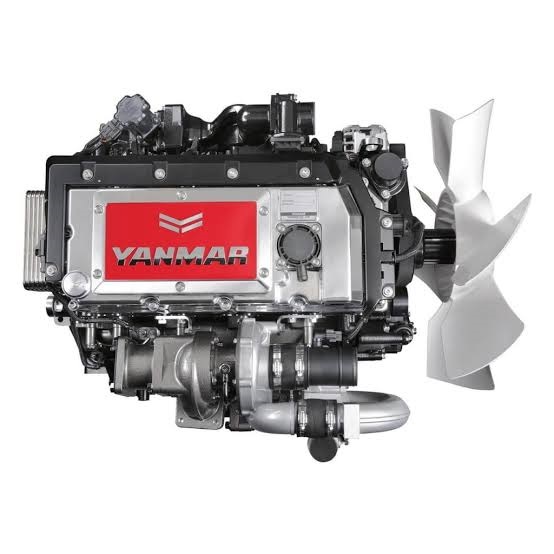
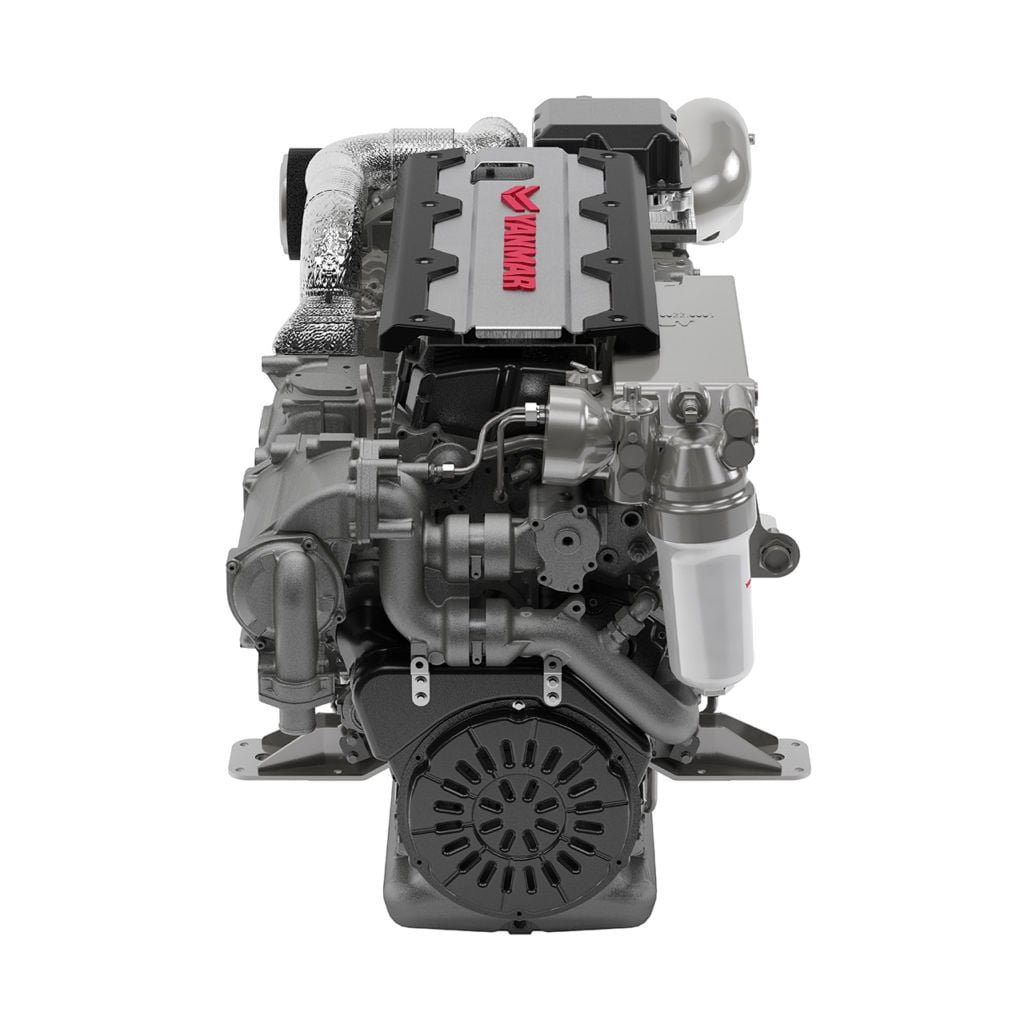
For example, the Yanmar 3YM20 uses mechanical fuel injection, while the Yanmar 4JH57 uses electronically managed common-rail direct injection. The two engines do not have identical bleeding, control or fault-diagnosis procedures.
Their official specifications can be checked on Yanmar’s 3YM20 product page and 4JH57 product page.
Before ordering parts or attempting diagnosis, record:
- Complete engine model
- Engine serial number
- Operating hours
- Rated horsepower and rpm
- Gearbox or saildrive model
- Gear ratio
- Instrument-panel type
- Displayed fault codes
- Recent repairs or maintenance
- Fuel, oil and coolant recently used
Yanmar states that the engine model and serial number are important when requesting parts or service. These details can normally be found on the engine identification plate, although the plate location varies between models.
Record Exactly When the Problem Appears
A useful diagnosis requires more than “the engine loses power.”
Record whether the symptom happens:
- During a cold start
- Only after warming up
- At idle
- During acceleration
- At a particular engine speed
- Only when the gearbox is engaged
- After running for a certain period
- In rough water
- After refuelling
- Immediately following maintenance
Also note the smoke colour, temperature, alarms, maximum rpm, exhaust-water flow, vessel speed and unusual smells or noises.
Compare these two descriptions:
“My Yanmar is losing power.”
“The engine runs normally for 20 minutes of Yanmar marine engine troubleshooting, then loses approximately 400 rpm under load. Temperature remains normal, and loosening the fuel cap temporarily improves performance.”
The second description gives a technician meaningful evidence. It suggests investigating fuel delivery and the tank vent before replacing unrelated parts.
Yanmar Marine Engine Will Not Crank
If the crankshaft is not rotating, the immediate problem is normally within the starting circuit, control system or engine itself—not the fuel supply.
Common Symptoms
- Nothing happens when the start button is pressed
- A single click is heard
- The engine cranks slowly
- The starter works intermittently
- Panel lights become very dim during starting
Possible Causes
A Yanmar engine that will not crank may have:
- A discharged or damaged battery
- Corroded or loose terminals
- Poor engine grounding
- A faulty battery-isolation switch
- A damaged fuse or relay
- A failed starter solenoid
- A worn starter motor
- A faulty ignition switch or control panel
- A misadjusted neutral-safety switch
- Excessive resistance in the battery cables
- A seized or hydrolocked engine
Practical Initial Checks
Confirm that the control lever is firmly in neutral. Moving it slightly may help reveal a misadjusted neutral-safety switch.
Inspect the battery terminals, engine-ground cable, battery switch and visible starter connections. A corroded connection may show acceptable voltage without a load but fail when the starter demands high current.
Observe the panel while attempting to start:
- If the lights become very dim, suspect a weak battery, poor cable connection or excessive starter draw.
- If the solenoid clicks but the engine does not turn, the starter or high-current circuit requires testing.
- If there is no response, investigate the panel supply, neutral switch, fuse, relay and control circuit.
Do not continue cranking if coolant or seawater may have entered a cylinder. Liquid cannot be compressed like air, and attempting to turn a hydrolocked engine can bend internal components.
Yanmar Engine Cranks but Will Not Start
When the starter rotates the engine normally but the engine does not fire, focus on fuel delivery, shutdown controls, cranking speed, electronic control and compression.
Common Causes
A Yanmar marine engine that cranks but will not start may have:
- An empty fuel tank
- A closed fuel valve
- Contaminated diesel
- Water in the fuel
- A blocked primary or secondary filter
- Air trapped in the fuel system
- A damaged hose drawing air
- A restricted tank pickup
- A blocked tank vent
- A weak lift pump
- A stop solenoid remaining in the shutdown position
- An injector or injection-pump fault
- An electronic engine-control fault
- Low compression
- Insufficient cranking speed
Start at the Fuel Tank
Confirm there is clean fuel in the tank and that every required fuel valve is open. Inspect the fuel/water separator for water, sediment, microbial contamination or a heavily restricted filter.
Follow the fuel supply from the tank toward the engine and look for:
- Cracked hoses
- Loose fittings
- Damaged filter seals
- Air bubbles
- Wet connections
- Kinked fuel lines
- A restricted tank vent
- A stop control that does not return to the run position
Experience-Based Diagnostic Pattern
A recurring pattern after fuel-filter replacement is an engine that ran correctly before service but will not start afterward. The cause is frequently connected to the work just completed:
- Air remains trapped in the system
- The filter is incorrectly fitted
- A sealing ring is damaged
- Two sealing rings have been installed accidentally
- A fuel valve remains closed
- A loose connection is drawing air
This does not prove the filter service caused the problem, but the timing makes it the most logical place to begin.
Important Common-Rail Warning
Older mechanical engines may use a model-specific manual bleeding procedure. Modern Yanmar common-rail engine troubleshooting requires stricter precautions.
Never loosen common-rail pipes or high-pressure injector connections. Restore and bleed only the approved low-pressure side according to the correct manual. Yanmar’s official manuals warn that high-pressure fuel can cause serious injury.
Owners comparing modern electronic engine options can review the Yanmar 6LY Series common-rail marine engines and the Yanmar 6LY400 common-rail engine available from Rong Marine.
If clean fuel reaches the engine and it still does not start, professional testing may be required for injectors, cranking speed, compression, electronic controls and injection timing.
Yanmar Engine Starts and Then Stalls
An engine that starts and dies shortly afterward may be consuming the fuel available in the filter or injection system before a restriction interrupts the supply.
Possible causes include:
- Blocked fuel filters
- Contaminated diesel
- A clogged tank pickup
- A restricted fuel-tank vent
- Air entering through a loose fitting
- A weak lift pump
- A faulty stop solenoid
- An electronic sensor or control fault
- Idle speed below specification
If the engine runs longer after the fuel-filler cap is loosened, a restricted tank vent becomes a strong possibility. Treat this only as a diagnostic clue; repair the vent properly before returning the vessel to service.
Repeatedly blocked filters usually indicate a fuel-tank contamination problem. Replacing filters may restore temporary operation, but it does not remove the underlying contamination.
Yanmar Marine Engine Overheating
An overheating alarm requires immediate attention. Continuing to run the engine can damage the cylinder head, head gasket, pistons, exhaust components, hoses and lubricating oil.
Warning Signs
Symptoms of a Yanmar marine engine overheating include:
- High-temperature warning light or buzzer
- Temperature rising above its normal range
- Reduced water discharge at the exhaust
- Steam near the exhaust outlet
- Coolant smell
- Coolant loss
- Reduced power
- Automatic engine protection on electronic models
Raw-Water-Side Causes
- Closed seawater seacock
- Blocked hull intake
- Clogged sea strainer
- Damaged raw-water pump impeller
- Loose pump cover
- Air entering the suction side
- Collapsed hose
- Restricted heat exchanger
- Blocked exhaust mixing elbow
Freshwater-Side Causes
- Low coolant
- Leaking hose or clamp
- Loose or slipping belt
- Faulty thermostat
- Air trapped in the cooling system
- Defective pressure cap
- Damaged circulation pump
- Internal scale or corrosion
- Head-gasket leakage
A fouled hull, incorrectly pitched propeller or restricted drivetrain can also overload the engine and contribute to high operating temperature.
What to Do Immediately
Reduce engine load and observe the temperature. If the alarm remains active or the temperature continues to rise, stop the engine as soon as navigation conditions allow.
Check for raw-water discharge at the exhaust. Inspect the seacock, strainer, accessible hoses, belt, bilge and engine compartment.
Never remove the coolant cap while the engine is hot. Pressurized coolant can escape violently and cause severe burns.
Corrective Action
If the raw-water impeller is damaged, replace it with the correct part—but do not stop there. Locate missing blade fragments because they may be trapped in hoses, coolers or heat-exchanger passages.
Restore the specified coolant, repair leaks and bleed trapped air using the correct procedure. A blocked heat exchanger or mixing elbow may require removal, cleaning or replacement.
Repeated overheating, unexplained coolant loss, bubbles in the expansion tank, contaminated oil or persistent white vapour may indicate an internal engine problem requiring professional diagnosis.
What Yanmar Diesel Exhaust Smoke Can Tell You
Smoke colour is a diagnostic clue, not proof of a single failure. Consider it together with temperature, load, oil consumption, fuel quality and whether the smoke disappears after warm-up.
Black Smoke From a Yanmar Engine
Black smoke usually means the engine is receiving more fuel than it can burn with the available air, or the propulsion system is demanding more power than the engine can deliver cleanly.
Possible causes include:
- Fouled hull
- Rope or debris around the propeller
- Oversized or over-pitched propeller
- Damaged propeller
- Restricted air intake
- Blocked exhaust mixing elbow
- Excessive exhaust back pressure
- Dirty charge-air cooler
- Boost-air leak
- Turbocharger fault
- Injector problem
- Poor-quality fuel
A useful diagnostic pattern is an engine that runs smoothly in neutral but cannot reach rated rpm in gear and produces increasing black smoke. This commonly directs attention toward vessel loading, propeller condition, drivetrain resistance, intake restriction, exhaust restriction or turbocharger performance.
Compare maximum rpm under load with the specification for the exact engine. Do not increase fuel delivery to disguise an overloaded propeller or restricted exhaust.
White Smoke From a Yanmar Engine
Light vapour during a cold start may disappear as the engine reaches operating temperature. Persistent dense white smoke requires closer investigation.
Possible causes include:
- Incomplete cold combustion
- Air in the fuel
- Water-contaminated diesel
- Poor injector spray
- Incorrect injection timing
- Low cylinder compression
- A cold-running cylinder
- Coolant or seawater entering a cylinder
If white smoke continues after warm-up, monitor coolant loss and inspect the oil for changes in colour, level or consistency.
Stop the engine if water ingestion is suspected. Continuing to crank or operate an engine with liquid entering a cylinder can cause major internal damage.
Blue Smoke From a Yanmar Engine
Blue or blue-grey smoke generally indicates that lubricating oil is entering the combustion chamber.
Possible causes include:
- Excessive engine-oil level
- Incorrect oil viscosity
- Worn piston rings or cylinder surfaces
- Worn valve guides or seals
- Turbocharger oil-seal leakage
- Excessive crankcase pressure
- Extended operation at very light load
Confirm the oil level using the procedure in the engine manual. Overfilling can cause smoke, oil carryover and excessive crankcase pressure.
Persistent blue smoke from a Yanmar marine engine normally justifies compression, leak-down, turbocharger and crankcase-pressure testing.
Yanmar Engine Loses Power or Cannot Reach Rated RPM
Power loss does not automatically mean the engine requires rebuilding. The vessel, propeller and drivetrain can overload an otherwise serviceable engine.
Common Symptoms
- Slow acceleration
- Reduced vessel speed
- Engine cannot reach specified rpm
- Power decreases as the engine warms
- Normal performance in neutral but poor performance in gear
- Increasing black smoke during acceleration
- Surging engine speed
Possible Causes
A Yanmar engine losing power under load may have:
- Restricted fuel filters
- Blocked tank vent
- Air entering a fuel line
- Contaminated diesel
- Fouled hull
- Damaged or incorrectly sized propeller
- Rope around the propeller
- Binding shaft or drivetrain
- Restricted exhaust mixing elbow
- Dirty air intake
- Boost leak
- Turbocharger damage
- Injector fault
- Low compression
- Transmission resistance
Begin with fuel flow, filters, air intake, exhaust, propeller condition and vessel load. Record the maximum rpm reached in gear, smoke colour and whether performance changes as the engine warms.
If the engine reaches rated rpm but the vessel remains slow, investigate the hull, propeller, shaft, gearbox or saildrive rather than assuming the engine is producing insufficient power.
Yanmar Engine Runs Rough, Misfires or Hunts at Idle
Possible causes include:
- Air in the fuel system
- Water or contamination in the diesel
- Restricted filters
- Injector problems
- Uneven compression
- Incorrect valve clearance
- Incorrect idle speed
- Electronic sensor or actuator faults
- Damaged engine mounts exaggerating normal movement
If the problem began immediately after fuel service, check for trapped air, damaged filter seals and loose connections.
Electronically controlled engines may store a fault code even when the warning disappears. Record the code and operating conditions before disconnecting power or clearing the history.
Excessive Engine Vibration
The conditions under which vibration occurs can help separate an engine problem from a propulsion problem.
Vibration at idle may indicate uneven combustion, incorrect idle speed or deteriorated mounts. Vibration only in gear points more strongly toward the propeller, shaft, coupling, alignment, cutless bearing, saildrive or transmission.
Possible causes include:
- Propeller fouling or damage
- Bent propeller shaft
- Shaft misalignment
- Worn cutless bearing
- Loose or oil-damaged engine mounts
- Damaged coupling
- Damper-plate problem
- Uneven cylinder performance
- Incorrect idle speed
If vibration begins after grounding or a propeller strike, avoid continued operation until the drivetrain has been inspected.
Unusual Yanmar Engine Noises
A new, loud or rapidly worsening mechanical noise should be investigated immediately.
Knocking or Metallic Noise
Possible causes include injector knock, excessive valve clearance, combustion problems, bearing wear, low oil pressure, piston damage or a loose internal component.
A deep knock combined with an oil-pressure warning is particularly serious. Stop the engine.
Squealing Noise
Squealing commonly indicates a loose or worn belt, but it may also come from an alternator, water pump, tensioner or pulley bearing.
Do not reach into the belt area while the engine is running.
Rattling Noise
Inspect brackets, heat shields, belt guards, exhaust components, mounts, couplings and the damper plate.
Hissing or Whistling
On a turbocharged engine, hissing can indicate an intake-air, charge-air or exhaust leak. A change in turbocharger sound combined with black smoke or power loss requires prompt investigation.
Low Oil Pressure or Oil-Pressure Alarm
Treat a Yanmar oil-pressure warning alarm as genuine until proper testing proves otherwise.
Possible causes include:
- Low oil level
- Incorrect oil viscosity
- External oil leak
- Fuel or coolant dilution
- Restricted filter or pickup
- Faulty pressure sender
- Damaged wiring
- Worn oil pump
- Excessive bearing clearance
Stop the engine as soon as it is safe. Check the oil level, bilge, filter, drain system and visible seals.
Do not assume the sender is faulty. A qualified technician should confirm actual pressure with an appropriate mechanical gauge before the engine is returned to service.
Oil, Fuel, Coolant and Seawater Leaks
Identify the type of fluid and trace it to the highest visible point. Airflow and vibration can spread fluid away from its original source.
Oil Leaks
Check:
- Rocker-cover gasket
- Oil-filter seal
- Sump and drain system
- Front and rear seals
- Turbocharger oil lines
- Crankcase ventilation system
Fuel Leaks
Check:
- Filter seals
- Hose connections
- Injector return lines
- Low-pressure fuel pipes
- Pumps and injection components
Never use a bare hand to search for a high-pressure fuel leak.
Coolant Leaks
Check:
- Hoses and clamps
- Heat-exchanger end caps
- Circulation pump
- Thermostat housing
- Expansion tank
- Pressure cap
- Head-gasket area
Seawater Leaks
Check:
- Sea strainer
- Raw-water hoses
- Pump cover and seal
- Anti-siphon valve
- Heat exchanger
- Exhaust mixing elbow
- Hose clamps
Fuel leakage, seawater near electrical components, coolant in the engine oil or fuel in the bilge requires immediate attention.
Yanmar Battery Is Not Charging
Common symptoms include:
- Charge-warning light remains on
- Battery voltage decreases while running
- Batteries repeatedly become discharged
- Electrical accessories operate poorly
- Belt squeals after startup
Possible causes include:
- Loose or damaged alternator belt
- Corroded terminals
- Poor engine ground
- Blown fuse or fusible link
- Damaged wiring
- Faulty alternator
- Weak battery
- Onboard load exceeding charging capacity
Inspect the belt with the engine stopped and test the battery and charging system. Charging behaviour can vary according to the alternator, battery type and onboard energy-management system, so use the specifications for the actual installation.
Warning Lights, Buzzers and Fault Codes
Depending on the engine and panel, an alarm may indicate:
- Low oil pressure
- High coolant temperature
- Charging-system failure
- Water in the fuel
- Electronic engine-control fault
Record the fault code and the operating conditions under which it appeared. Observe temperature, smoke, exhaust-water flow, leaks and engine behaviour.
Never disconnect an alarm simply to silence it. The alarm is warning you about another problem; removing the warning does not remove the fault.
Yanmar Transmission and Saildrive Problems
Not every propulsion problem begins inside the engine. Problems may also originate in the Yanmar marine gearbox, control system, coupling, propeller or Yanmar saildrive.
Common Yanmar gearbox or saildrive problems include:
- Gear does not engage
- Delayed engagement
- Slipping
- Grinding or clunking
- Lubricant leakage
- Abnormal operating temperature
- Vibration
- Vessel does not move despite increasing rpm
- Water contamination in saildrive lubricant
Check the lubricant level and condition using the correct procedure. Inspect the control cable, shift linkage, coupling, propeller and visible seals.
Milky lubricant may indicate water contamination. Grinding, slipping, severe leakage or delayed engagement requires specialist attention. Rong Marine’s transmission and gear services page provides additional information about available drivetrain support.

Problems That Appear After Maintenance
When a problem begins immediately after maintenance, inspect the completed work before assuming an unrelated component failed.
No Start After Fuel-Filter Replacement
Check for:
- Trapped air
- Incorrectly installed filter
- Damaged or doubled sealing ring
- Loose connection drawing air
- Closed fuel valve
- Shutdown control left engaged
Overheating After Impeller Replacement
Check for:
- Closed seacock
- Incorrect impeller installation
- Pump cover drawing air
- Hose reconnected incorrectly
- Fragments of the old impeller blocking downstream passages
Oil Leak After an Oil Change
Check for:
- Old filter gasket left on the mounting surface
- Loose or incorrect filter
- Overfilled crankcase
- Loose drain plug
- Unsecured oil-extraction fitting
The timing of a new problem does not prove its cause, but it gives you a logical place to begin.
Emergency Troubleshooting While Underway
Protecting the people and vessel comes before protecting the engine.
If the Engine Overheats
Reduce load and observe the exhaust-water flow. Stop the engine if the alarm remains active. When conditions are safe, inspect the seacock, strainer, belt, visible hoses and bilge.
If the Engine Suddenly Loses Power
Check for alarms and note the smoke colour. Inspect the fuel supply and separator. Consider whether rope, netting or debris may have fouled the propeller.
Never approach the propeller unless the engine is secured against accidental starting and conditions are safe.
If the Engine Stops Unexpectedly
Confirm fuel supply and electrical power. Inspect the engine compartment for oil, fuel, coolant, seawater, smoke or unusual smells.
Avoid repeated starting attempts if the engine stopped with a loud noise, lost oil pressure, overheated severely or may have ingested water.
Essential Spares to Carry
Depending on the engine and voyage, a practical onboard spares kit may include:
- Primary and secondary fuel filters
- Engine-oil filter
- Correct raw-water impeller
- Drive belts
- Correct engine oil
- Approved coolant
- Fuses and relays
- Hose clamps
- Suitable spare hose
- Fuel-treatment supplies
- Model-specific tools
- Operation manual
Troubleshooting Mistakes to Avoid
- Replacing parts without testing
- Continuing after an oil-pressure alarm
- Running an overheating engine
- Opening a hot cooling system
- Cranking until the starter overheats
- Using starting fluid without model-specific approval
- Loosening common-rail fuel connections
- Installing incorrect filters or fluids
- Ignoring propeller load when investigating black smoke
- Clearing fault codes before recording them
- Treating an intermittent fault as harmless
- Bypassing an alarm
- Increasing fuel delivery to compensate for excessive propeller load
Systematic diagnosis is normally safer and less expensive than guesswork.
How Preventive Maintenance Reduces Yanmar Problems
Daily and Pre-Departure Checks
Inspect:
- Engine-oil level
- Coolant level
- Fuel/water separator
- Belt condition
- Raw-water intake and strainer
- Battery connections
- Visible leaks
- Exhaust-water flow
- Panel warnings
- Unusual smells or sounds
Scheduled Maintenance
Use the schedule for the exact engine rather than relying on a universal online interval. Typical service areas include:
- Engine oil and filter
- Fuel filters
- Raw-water impeller
- Drive belts
- Coolant
- Heat exchanger
- Exhaust mixing elbow
- Engine anodes where fitted
- Valve clearance
- Air intake
- Gearbox or saildrive lubricant
- Electronic fault history
Yanmar recommends following the applicable maintenance schedule and retaining service records. Its current Limited Warranty Handbook also explains the importance of documented maintenance and repair history.
Maintain an Engine Log
Record:
- Operating hours
- Service dates
- Filters and fluids used
- Alarm events
- Repairs performed
- Oil and coolant consumption
- Maximum rpm under load
- Recurring symptoms
- Fuel sources
- Parts replaced
A detailed engine log can reveal gradual performance changes that may otherwise go unnoticed.
When to Stop Troubleshooting and Call a Technician
Professional diagnosis is recommended when the engine has:
- Persistent low oil pressure
- Repeated overheating
- Severe mechanical knocking
- Metal particles in the oil
- Coolant or seawater in a cylinder
- Coolant contamination in the oil
- Low or uneven compression
- Common-rail injection faults
- Turbocharger damage
- Internal coolant loss
- Persistent heavy smoke
- Electronic faults requiring diagnostic software
- Transmission slipping or grinding
- Damage following flooding, grounding or water ingestion
Problems involving internal engine damage, compression loss or repeated overheating may require professional marine engine services.
Knowing when to stop is part of responsible troubleshooting.
Should You Repair, Rebuild or Replace the Engine?
Repair May Be Appropriate When
- The fault is limited to an external component
- Oil pressure and compression remain healthy
- The engine has a documented maintenance history
- Replacement parts are available
- The installation suits the vessel
- Repair costs remain reasonable
Rebuilding May Make Sense When
- The block and major components are serviceable
- Direct replacement would require extensive vessel modifications
- A qualified rebuilder and correct parts are available
- The projected service life justifies the total rebuild cost
Repowering May Offer Better Value When
- The engine has extensive internal wear
- Several major systems require repair
- Important parts are obsolete
- Repair costs approach replacement cost
- Reliability is essential to the vessel’s operation
- The current engine is incorrectly sized
- The owner wants improved controls, efficiency, emissions performance or parts support
Compare the complete project cost—not just the engine price. Include removal, installation, controls, wiring, exhaust, cooling, mounts, gear compatibility, downtime and expected service life.
If replacement appears more practical, review our Yanmar marine engine buyer’s guide to understand the available engine families, vessel applications and repower considerations.
Information Rong Marine Needs for a Repower Recommendation
For accurate Yanmar marine engine replacement and repower guidance, provide:
- Current engine model and serial number
- Rated horsepower and rpm
- Operating hours
- Gearbox or saildrive model
- Gear ratio
- Propeller diameter and pitch
- Vessel type, length, weight and use
- Engine-room dimensions
- Installation photographs
- Exhaust and cooling arrangement
- Delivery destination
- Required project timeline
A replacement engine should be selected for the vessel and propulsion system—not only by matching the horsepower shown on the old engine.
Sailboat owners considering a compact replacement can also explore the Yanmar JH Series, which includes several engines intended for sailing yachts, catamarans and auxiliary propulsion applications.
How Rong Marine Can Help
Rong Marine assists vessel owners, shipyards, yacht managers and commercial operators with sourcing Yanmar marine diesel engines, compatible propulsion packages, service parts and repower components.
Our commercial support can include reviewing:
- Engine specifications
- Potential replacement models
- Gearbox and saildrive compatibility
- Gear ratios
- Installation dimensions
- Propulsion-package requirements
- Parts requirements
- Domestic and international delivery information
Rong Marine’s role is to assist with engine selection, sourcing and quotation preparation. Model-specific repairs, electronic diagnosis and safety-critical testing should be completed by appropriately qualified marine technicians.
Need help sourcing a replacement engine, gearbox or saildrive? Contact Rong Marine with the engine model, serial number, operating hours, symptoms, photographs, gearbox details and delivery destination. Our team can review the information and prepare a quotation for suitable engines, parts or repower packages.
Frequently Asked Questions
For additional information about engine selection, repowering, ordering, shipping and warranties, visit Rong Marine’s marine diesel engine FAQs.
Why does my Yanmar marine engine crank but not start?
Common causes include a closed fuel valve, air in the fuel system, contaminated diesel, a blocked filter, inadequate cranking speed, a shutdown-control problem or an injection fault. Begin with the low-pressure fuel supply and use the bleeding procedure for the exact model. Never loosen common-rail pipes.
What commonly causes a Yanmar engine to overheat?
Restricted raw-water flow is a frequent cause. Check the seacock, intake, strainer, impeller, hoses, heat exchanger and exhaust-water discharge. Low coolant, belt problems, thermostat faults and excessive engine load can also cause overheating.
Why is my Yanmar producing black smoke?
Black smoke commonly indicates excessive engine load, insufficient intake air or restricted exhaust flow. Inspect the propeller, hull, drivetrain, air intake, exhaust elbow, turbocharger system and injectors.
What causes white smoke?
Possible causes include incomplete cold combustion, water-contaminated fuel, injector problems, low compression or coolant or seawater entering a cylinder. Persistent white smoke should be diagnosed promptly.
Why does my Yanmar lose power under load?
Possible causes include restricted fuel flow, a blocked tank vent, contaminated diesel, hull or propeller fouling, incorrect propeller pitch, restricted exhaust, turbocharger faults or drivetrain resistance.
Why does the Yanmar alarm sound while the engine is running?
Depending on the engine and panel, the alarm may indicate low oil pressure, high coolant temperature, a charging fault, water in the fuel or an electronic engine fault. Reduce power when appropriate, observe the instruments and stop the engine when continued operation could cause damage.
Can a blocked exhaust mixing elbow cause power loss?
Yes. A restricted elbow can increase exhaust back pressure, reduce maximum rpm and contribute to black smoke or overheating.
How often should the raw-water impeller be replaced?
The correct interval depends on the engine, pump, operating hours and operating environment. Follow the inspection and replacement schedule in the manual for the exact model.
How do I bleed a Yanmar marine diesel?
The procedure differs between mechanical and common-rail engines. Follow the model-specific manual and bleed only approved low-pressure points. Never loosen common-rail or high-pressure injector pipes.
Should I repair, rebuild or replace my Yanmar?
Repair is usually appropriate for an isolated fault when the engine remains healthy. Rebuilding may be worthwhile when the core engine is serviceable and replacement would be difficult. Repowering becomes more attractive when wear is extensive, parts are obsolete or repair costs approach the complete replacement cost.
Final Thoughts
Accurate Yanmar diesel engine troubleshooting begins with the exact symptom, the conditions under which it appears and the systems capable of producing it.
Check the safest and simplest possibilities first. Record your observations. Test one system at a time, and avoid replacing parts until the evidence supports the decision.
Fuel, cooling, electrical, intake, exhaust, drivetrain and internal engine faults can produce similar symptoms. That is why a systematic approach matters.
Most importantly, take oil-pressure alarms, overheating, fuel leaks, water ingestion and severe mechanical noises seriously. These conditions can threaten the engine, vessel and people onboard.
For assistance and delivery information.
Sources and Editorial Disclosure
This independent educational guide was fact-checked using official Yanmar information, including:
- Yanmar Marine engine search and model information
- Yanmar 3YM20 specifications
- Yanmar 4JH57 specifications
- Yanmar Marine service downloads
- Yanmar Limited Warranty Handbook
Yanmar is a trademark of its respective owner. This article does not replace an official operation manual, service manual or inspection by a qualified marine technician. Rong Marine should not be described as an authorized Yanmar dealer unless that status can be documented.
Leave a Reply